
Aberdare Boys’ Grammar School
Certificate Ceremonies
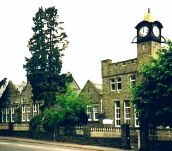
Certificate Ceremony, 7th April 1924, for the class of 1923
ABERDARE BOYS INTER-
MEDIATE SCHOOL.
Earl of Plymouth at Annual Prize
Distribution.
The Right Hon. the Earl of Plymouth was accorded an enthusiastic welcome at the Palladium, Aberdare, on Monday afternoon, when he presented prizes and certificates to the successful students at the annual distribution in connection with the Boys’ Intermediate School. The High Constable, Mr. W.M. Llewellyn, M.E., C.C., presided over a crowded audience, which included parents, members of the staff and scholars, and he was supported on the platform by Mrs. W.Charlton Cox, Mrs. A.P. Thomas, Miss M.Cook, M.A. (headmistress Girls’ Intermediate School), Alderman Wm.Thomas, C.C., Messrs. T.Marchant Harries, C.C., J.Ll. Smith, C.C., G.A.Treharne, C.C., J.D.Thomas, T.Botting, B.Sc. (Director of Education), and W.Charlton Cox, M.A. (headmaster).
The Chairman. in his introductory remarks, said he had pleasure in introducing the Earl of Plymouth to the gathering. The late Earl, with whom they had been more intimate, was considered one of the most democratic of their nobility. He pleased to think that the responsibilities had fallen on one who had the interest of democracy at heart, and he could congratulate the headmaster upon having secured the services of the Earl of Plymouth for that day. Meetings of that kind gave the parents and the students an opportunity of coming face to face with the staff and the governors, and could see what jolly lot of people they were (Laughter.) It also allowed the staff to confer with parents. It been his privilege to be a governor for seven years, and, for the last two years he had been chairman of the governors. Therefore, he had had opportunity of coming into constant contact with the school and staff, and he had no hesitation in saying that the Aberdare Intermediate School was second to none in South Wales. (Applause.) He was about the staff, not the boys—(laughter)—and he desired to congratulate the staff on their wonderful achievements during the last few years. As he had remarked on previous occasions, he hoped the boys would realise that many of them were at school as the result of great sacrifice on the part of their parents and that they would determine to make the most of the great opportunity afforded them.
HEADMASTER’S REPORT.
The Headmaster, in presenting his twenty-seventh annual report for the year ending July, 1923, expressed, on behalf of the staff and the pupils, how very much they appreciated the honour which had been conferred upon their school by the presence there that afternoon of the Earl of Plymouth (Applause.) He was sure that in future years all the pupils that were there that day would look back upon that prize-day as one of the red-letter days of their school career and remember it with gratification. It was pleasing to note that the attendance at the school was increasing, for it showed that the people of Aberdare district were appreciating more and more the importance of giving their sons such education as was offered by the Boys’ Intermediate School. The results of the examinations had been very gratifying, and what was probably unique was that out of five students entered for the London Matriculation, four passed, one in the first division. He expressed thanks to the governors for their great interest in the work, and concluded by saying that he considered the scholar did very well indeed during the year under review. The report stated that the numbers on register for autumn term: was 297 pupils; spring term 1923, 288 pupils; summer term, 1923, 270 pupils. This gave an average for the three terms of 285 pupils, which was an increase of 12 on the average number during the preceding year. No further increase in the number pupils in attendance was now possible, as the limit of the accommodation available had now been reached. No alteration in the teaching staff occurred during the year under review. He took the opportunity of recording his appreciation of the manner in which the staff carried out their duties throughout the year; it deserved high praise. He thought he was justified in claiming that the examination successes gained during the year were gratifying. They included: London Matriculation, 5 pupils were entered and 4 passed, 1 in the 1st Division; first Medical Examination of the Conjoint Board, 1 pupil was entered and passed at the first attempt; Central Welsh Board. Higher Certificate, 9 pupils were entered, and 8 passed, 3 with distinction; Supplementary Certificate, 9 pupils were entered and all passed, 2 with distinction; School Certificates (formerly Senior Certificate), 50 pupils were entered and 31 passed, 13 with distinction. and 3 gaining exemption from the Welsh Matriculation Examination. The percentage of pupils successful was 70; 22 marks of distinction were gained in all. On the result of the above examinations a County Free Studentship of £60 a year and fees was awarded to B.C. Erricker, and County Exhibition of the same value was awarded to E.John Shannon. Both these pupils had now entered the University College of Wales, Aberystwyth. Further distinctions were gained during the year by past pupil of the school. Of these he would mention specially the names of Mr. J.D.Powell, who gained first class honours in English in the University of Wales; Mr. Garfield Thomas, who gained the degree of M.Sc., in the University of Manchester, and was appointed assistant chemical pathologist at the Manchester Infirmary, and Mr. Henry Thomas, who the degree of M.A. in the University of Wales. Rugby football was last year adopted us the winter game, and was played with great keenness and success, one of the pupils, B.C.Erricker, being awarded his international cap against France in the Schoolboys’ International. More interest was shown by the younger boys in cricket than in the preceding year, but far less than is shown in football. The weekly meetings of the Debating Society during the winter were an increasingly popular feature, and some really good papers on the burning questions of the day were read in them, During the last week of the spring term public performances of Shakespeare’s “Twelfth Night” were given by pupils, which resulted in a substantial sum being handed to the Games Fund. Owing to their being unable to secure the loan of the Ynys Field last summer, it was decided not to hold Athletic Sports at that time.
PRIZES AND CERTIFICATES.
The Earl of Plymouth handed over the prizes and certificates to the successful students. A full list of these was as follows :—
Central Welsh Board Certificates.— Higher: E.G. Davies, J.B.Davies (1 distinction), B.C.Erricker (2 distinctions), R.W.Francis, E.J.Shannon (1 distinction), J.C.L.Thomas, W.D.Walters.
School: A.F.Carter, D.M.Edwards (2 distinctions), B.T.Evans (2 distinctions), W.I.Evans, W.J.Evans, M.T.Goronwy, J.R.Hinton, I.T.James (1 distinction), E.S.Jenkins (1 distinction), Trevor Jenkins (1 distinction), D.T.Jones (1 distinction), J.S.Jones, T.G.Jones, Trefor Jones, R.C.Knight (1 distinction), A.Lewis, G.H.Marsh (1 distinction), J.G.Nicholas. W.W.Notton, I.Phillips, M.Phillips (1 distinction), T.T.Price, E.H.Rake, R. Reynolds, A.Roberts (1 distinction), B.Samuel (1 distinction), B.P.Thomas, I.I.Thomas (1 distinction), Trevor Thomas, H.E.Williams (4 distinctions).
Supplementary: R.N.Berry (1 distinction), D.G. Evans, D.M.Francis, H.W.H.Hodges, P.Jones, R.B. Jones, J.J.C.Shannon, E.G.Davies (1 distinction).
London Matriculation Examination:—R.N.Berry, 1st division; Victor W. Jones, H.Kelly, David Lewis, 2nd division.
First Medical Examination of the Conjoint Board: W. L.Probert.
Prizes awarded by the governors.—
Form 6a: Form Prize, B.C.Erricker. English Subjects, E.J.Shannon. Languages, J.C.L.Thomas. Mathematics and Science, R.W.Francis.
Form 6b: Form Prize, R.N.Berry. English subjects, P.Jones. Languages, R.B.Jones. Science, J.J.C. Shannon.
Form 5a: Form prize, H.E.Williams. English subjects, E.S.Jenkins. Mathematics and Science, R.C.Knight. Languages, G.H.Marsh.
Form 5b: Form prize, Trevor Jenkins. English subjects, I.T.James. Languages, M.Phillips. Mathematics and Science, A.F.Carter.
Form 4a: Form prize, C.C.T.Baker. English subjects, H.E.Davies. Languages, D.T.Jones. Mathematics and Science, I.N.Stevenson.
Form 4b: Form prize, J.W.Evans. Languages, A. Morris. Mathematics and Science, J.C.Williams.
Form 3a: Form prize, G.L.Sefton. English subjects, W.D.Davies. Languages, I.Williams. Mathematics and Science, C.H.Morgan.
Form 3b: Form prize, I.Bridges. English subjects, W.Codd. Languages, A.G.C.Cox. Mathematics and Science, W.S.Davies.
Form 3c: Form prize, F.Jordan. English subjects, A.W.A.Morgan. Languages, J.H.Morgan.
Form 1a: Form prize, H.W.Davies. English subjects, R.Pardoe. Languages, B.Price. Mathematics and Science, T.R.James.
Form 1b: Form prize, V.H.Jones. English subjects, J.G.Jones. Languages, G.I.John. Mathematics and Science, R.J.Rosser.
Special prizes: Drawing, C.E.Davies. Book-keeping, D.M.Edwards. Shorthand, A.P.Owens. Music, J.A.Jenkins.
Commercial Certificates: Book-keeping, Institute of Book-keepers—
Stage II (Associateship): Class I, H.W.Evans, J.W. Evans (Vc.), L.S.Daniels (Vc.), A.R.Probert (IV Mod.). Class II., J.J.Parry (IV. Mod.), H.G.Hopkins (IV Mod..), M.Vaughan, (IV. Mod.), V.B.Jones (IV Mod.), J.H.Hargrave (IV Mod.), W.H.Hobbs (Vc.).
Stage I. (Elementary): D.J.Bremner (IV. M.), L.A. Burgess (IV. M.), W.Codd (IV. M.), R.D.Shepherd (IV. M.), R.K.Powell (Vc.), E.Lee (Vc.), R.J. George, C.I.D.Edwards (Vc.), E.T.Llewellyn (Vc.), D.H.Morgan (Vc.), W.A.Thomas, W.H.W.Jones, S. Vivian (Vc), W.D.Richards (IV. Mod), F.Jordan (IV. M), R.R.Griffiths (Vc.), H.G.Hopkins (IV. M.) J.H. Hargrave (IV. M.), W.H.Hobbs (Vc.), M.Vaughan (IV. M), V.B.Jones (IV. M.), J.C.Williams (Vc.), R. W.Rosser (IV. M.), J.J.Parry (IV. M), C.M.Morgan (IV. M), E.J.Price, A.R.Probert (IV. M.).
Shorthand, the Phonetic Institute.— 80 and 60 words a minute, J.W.Evans (Vc.). 50 words a minute, C.I.D.Edwards (Vc), W.H.Hobbs (Vc), R.K.Powell (Vc.), E.Lee (Vc.), J.C.Williams (Vc.). Elementary, G.Richards, M.Morgan (Vb.), W.H.Hobbs (Vc.), E.J.Price, A.M.Baker, J.Davies (Vb.), J.W.Evans (Vc.), R.K.Powell (Vc.), H.W.Evans, I.W.R. Stevenson (Vb), E.Lee (Vc.), S.Vivian (Vc.), E.T. Llewellyn (Vc.), A.R.Pugh (Vc.), J.C.Williams (Vc.), L.S.Daniells (Vc.), J.H.Hargrave (IV. M.), M. Vaughan (IV. Mod.).
THE EARL OF PLYMOUTH AND
“ROOM FOR EVERYBODY.”
The Earl of Plymouth, in his address, said he felt it was a great honour to have been asked to come there to present the prizes and certificates. It was a great pleasure to him always to identify himself with the educational work of the country. He had not left school so very long, and he felt he had a great many things to thank school for; also he would add jokingly, a number of things he did not thank school for, including an impaired digestive system. (Laughter). School days, however, were important, and what they really wanted now was knowledge that would lead to progress. He said that advisedly because it would be obviously wrong to educate everybody in exactly the same way. They could not all work in the same professions in after life, but what they surely all must do was to do what they could to develop on individual lines, and surely, in such times as at present, when so many of their fellow-countrymen and women were making a hard struggle, the opportunities that were given for the acquisition of knowledge should be adequately made use of. He, himself, often wished that he could have his schooldays over again, not only because he thoroughly enjoyed them, but because he believed he could have made better use of them than he did. People talked glibly about independence, but he could tell the scholars present, although they might think he was saying something absurd in face all the rules and regulations they had, that they would never enjoy greater freedom than they were now enjoying at school, and they would never know the same amount of freedom of mind in years to come as they had now. To-day was their chance to develop for that particular sphere for which they were best fitted. In such times as these, he did feel it was up to everyone there to prepare to share the responsibility of making the world a better place when they left it than when they first entered into it. There was room for everybody in life. Everybody had an appointed place, and it was whilst at school that scholars could best find out for themselves that particular sphere in life to which Providence was leading them. Realising the importance of that, it always gave him great pleasure to take his share, however humble it might be, in a meeting like that, and also because he believed that if they going to hold their own as a nation, then they must have education and education of the right kind. He congratulated the headmaster upon what appeared, judging from the examination lists, to have been very satisfactory year’s work. He also congratulated the staff, and those scholars who had won prizes, as well as sympathising with those who had not, for he had been in the same position himself. (Laughter.) He also desired to say how glad he was to know the games had not been neglected, for exercises and athletics generally were very important since, with proper exercise of the body, they could get the best out of the mind— which was what they were really all out to do. It had been a pleasure to be with them that afternoon, and he hoped that the privilege of coming to see them would be extended to him again in the near future. (Applause.)
In proposing a vote of thanks to the Earl of Plymouth, Alderman Wm. Thomas referred to the splendid educative and beneficent work of his late father, whilst Mr. T. Marchant Harries, C.C., assured the Earl, on his first public appearance in Aberdare, that they would be very pleased to see him again, and would give him very warm welcome.
Responding, the Earl of Plymouth said he did not feel he deserved any thanks at all. He greatly appreciated what had been said with reference to his father. It had been a great pleasure to be present, and he hoped to have that pleasure renewed.
A vote of thanks was also passed to the Chairman, on the proposition of Mr.G.A.Treharne, C.C., seconded by Mrs. A.P.Thomas, the Chairman mentioning. in his reply, the indebtedness of the governors to Mr. W.H.Mogford for kindly lending the Palladium.
During the meeting the school choir, under the conductorship of Mr. E. Ogwen Williams, rendered “The Last Rose of Summer” (P. E. Fletcher); “Gwyl Dewi Sant” and “Yr Amser Gynt,” and there was also a recitation by J.M.John, titled “Ymweliad y Cor Cymraeg Llundain,” and a gymnastic display by the scholars under the direction of Mr. E.J. Excell.
- The Earl of Plymouth, (1889–1943). The guest speaker was Ivor Miles
Windsor-Clive, 2nd Earl of Plymouth, (3rd creation). The family have
long-standing connections to south Wales, particularly as major landowners
in Glamorgan. The Plymouth Ironworks in Merthyr Tydfil was so named because
it was established on land leased from the Earl of Plymouth. The Plymouth
ironworks was one of the four famous ironworks that defined Merthyr Tydfil,
together with Cyfarthfa, Dowlais, and Penydarren.
Harriet Windsor-Clive was a major landowner and philanthropic benefactor, who built, and rebuilt, St Fagan’s Church in Trecynon. She was the grandmother of Robert George Windsor-Clive, (1857–1923), who was later created the 1st Earl of Plymouth (third creation) in 1905. - W.M. Llewellyn was one of the sons of Rees Llewellyn of Bwllfa, Cwmdare. There is a little more information about the highly influential Llewellyn family on this website here.
- Alderman Wm.Thomas was an Aberdare solicitor.
- T. Marchant Harries, (1885–1963), was a successful Aberdare solicitor and court Registrar.
- John Llewellin Smith – born in 1873 in Aberdare he was well known architect and estate agent in the town. He was for a time President of Aberdare Golf Club. He was one of the owners of the large house on Cwmbach Road named Glanynys, previously the home of his father-in-law F.W. Mander. He was also President of Aberdare Chamber of Trade. He and his wife retired to Tenby.
- Gwilym Alexander Treharne, (1859–1942), was a retired Aberdare architect of 21 Belmont Terrace, Aberaman.
- J.D.Thomas was an Aberdare solicitor with premises at 30 Canon Street. He and his wife retired to Monmouth.
- Thomas Botting, JP, BA, BSc, (1871–1949), born in Aberdare, Botting was Director of Education in the town in the days when the control of elementary education was in the hands of Aberdare Urban District Council. Before entering the administrative side of the education service, he competed for the headship of the Aberdare Boys’ County School in August 1905, coming second to W. Charlton Cox.
- John Benjamin Davies, M.A. returned to the school in 1945 to teach History and French. He retired as senior History Master in the summer of 1967. He was known to the boys by his nickname of ‘Curly’, although he possessed an almost hairless pate! He surprised Aberdarians when in his Will he was found to be a millionaire.
- B.C.Erricker became Senior Maths Master at Leyton High School, N.E. London. Two of his books are in the ‘library’ in the Academic Activities section of this website.
- Alec Francis Carter went to London University, and had joined the The Hampshire Regiment by 1930, served in the Signals Corps initially, and transferred to the new Intelligence Corps on the day it was founded. He was involved in mapping the beaches of northern France prior to the D-Day Landings; and then served with the liberating troops in Belgium and the Netherlands. He left the Army as Captain, was awarded a Fellowship of the Royal Geographical Society (FRGS) and taught geography in Hampshire schools until retirement. He died in May 1989.
- Brynley Thomas Evans has an entry in the Former Pupils section of this website.
- E.S.Jenkins – Edward Stanley Jenkins was born in 1908, and attended the Town Council School in Foundry Town. His family lived in Herbert Street and his father was a stationmaster at one of the town’s railway stations. E.S. Jenkins was at The County School from 1919 until 1926. He went to U.C Cardiff after gaining his School and Higher Certificates. He became Senior Modern Language Master at Chislehurst and Sidcup Grammar School for Boys. He was also Chief Examiner in French for the Welsh Joint Education Committee.
- Trevor Jenkins became Director of Education for the ‘old’ county of Glamorgan.
- Trefor Jones became headmaster of headships of Dorking Grammar School in Surrey, and later of Latymer School in London. He has an entry in the Former Pupils section of this website.
- R. Colin Knight of Gorphwysfa, Richmond Terrace, Abernant, was the son of the dentist Frank Knight. Later in life in 1958, as Dr. R.C. Knight, senior principal scientific officer in the MoD, he was awarded the OBE for his services in the scientific field.
- Richard Norman Berry, (1906–1952), left school with a County Exhibition for Kings College London to study engineering. He lived in Surrey and worked for the Central Electricity Generating Board. He married Muriel Marshall in Ilkeston, Derbyshire, in 1934. Richard was the son of AUDC Coun. Richard Lewis Berry, and grandson of the Victorian photographer J. Lendon Berry.
- R.W. Francis became Senior Physics Master at the school from 1947 to 1959. He left to become Headmaster of Bryn Celynnog Secondary School, Beddau.
- William Codd, (1909–1994), was a G.P. in Aberdare. His surgery was for many years located in Elizabeth Street, Aberdare. He entered medical school in Bristol and graduated M.B., Ch.B. in 1947. He later gained the qualification F.R.C.G.P. He married Isabel M.M. Wilson in 1938 – she also trained at Bristol graduating two years earlier than her future husband. Dr Codd and his wife lived in Abernant and brought up two boys and a daughter. His son Richard also attended ABGS.
- A.G.C.Cox was the headmaster’s son. He and his three siblings all became a doctors.
- Ronald Pardoe was brought up in Cwmbach. After teaching at Ynyslwyd School, he was appointed Physics master at Cyfarthfa Grammar School, Merthyr Tydfil. He went west to Tregaron in 1948 when he became Chemistry master at the town’s County School. In 1951 Ronald was appointed Headmaster of Ysgol Dyffryn Ogwen, Bethesda, Caernarfonshire where he remained until he retired.
- Thomas Richard James was from Cwmbach. He attended ABGS 1922–28 and later studied mathematics at UCW Aberystwyth, 1928–32, where he gained a First in Pure Mathematics. By 1937 he had been appointed to the staff of ABGS, but commenced a headship at Brynmawr GS from January 1st 1958. In 1952 he gained the LRAM qualification, and was probably better known as a musician – as an accompanist and in particular conductor of the Cwmbach Male Voice Choir.
- Glyn I. John was born in 1910 and lived for most of his life in Monk Street. As an adult he took an active part in the life of Aberdare, but was best known as being the town’s librarian. Leaving a previous post in Bridgend Library, he was appointed to Aberdare in February 1947, taking over from Mrs Edith E. Sturdy, who previously with her husband, Mr W. Henstone Sturdy, had been the town’s librarians since 1904. Glyn John served as librarian in three of its locations: at ‘Chews Shop’, High St (now demolished), opposite St John the Baptist Church; at Siloa Hall (1949–1963); and from 1963 at the library where it now stands. Glyn retired in 1972 and died in 1993. He can be seen in several pictures in the online RCT Photographic Archive, and was himself a keen member of Aberdare Camera Club.
- Arthur Reginald Probert, (1909–1975), was brought up in Aberaman the son of a publican. He became a local government officer for the housing department of the Aberdare UDC in 1928. During World War II he served in the RAF. He was active in the Trades Union movement in the town for many years. He succeeded D. Emlyn Thomas, as MP for the Aberdare constituency in a by-election in October 1954 and held the seat until his retirement in February 1974. He, his wife and two daughters lived at Allt Fedw, Abernant. Arthur Probert wrote a piece for the school’s 75th anniversary publication, which can be seen in the History section of this website.